TF-IDF Analysis Tool for Smarter Content Refreshes
Use TF-IDF to compare one page against a set of comparable search results, uncover missing support terms and entities, and plan better edits without drifting into keyword stuffing.
Refresh an underperforming article
Compare your page against 5 to 15 pages ranking for the same query and spot missing support terms, entities, and subtopics.
Tighten a page that feels vague
Use term weighting to see whether the page spends too much space on generic boilerplate and too little on the concepts users actually expect.
Prioritize manual edits
Turn a long list of possible additions into a short edit plan: add missing sections, improve examples, trim repetition, and clarify intent.
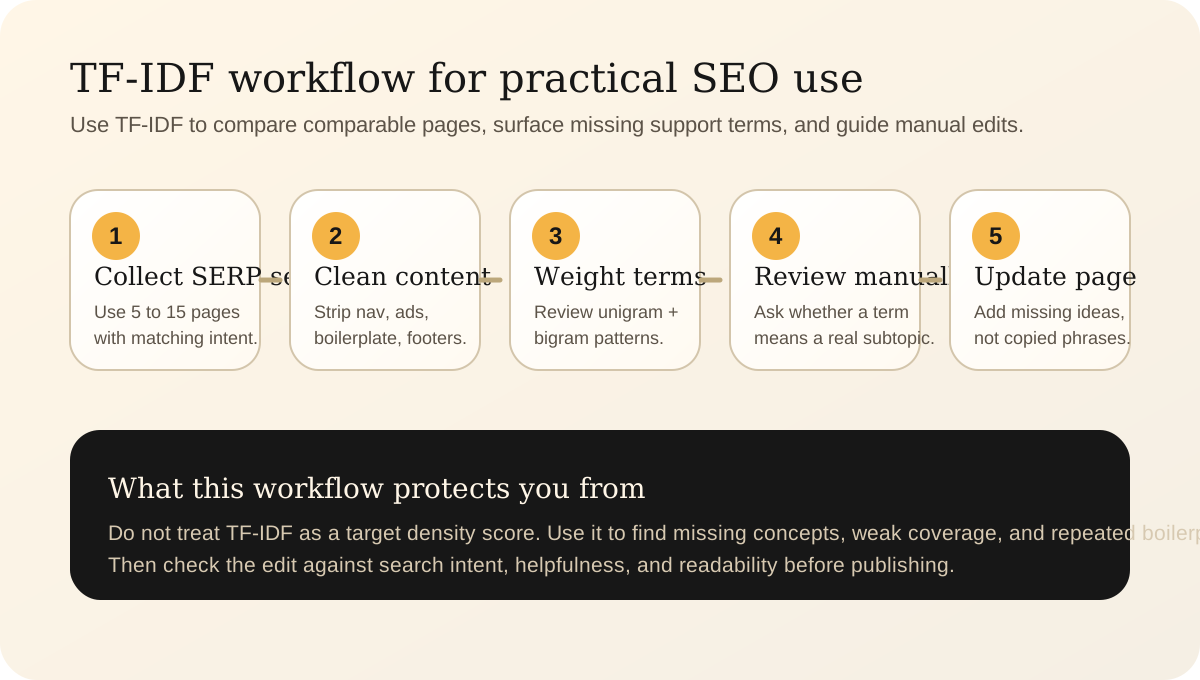
How we use TF-IDF in practice
TF-IDF works best after the page already has a clear query target and no obvious technical issues. We use it after checking indexing, crawlability, and intent fit, then turn the term output into a short editing brief.
Start with comparable pages
Use pages with matching search intent. If the SERP mixes tools, guides, and definitions, split those before you compare terms.
Extract the real body content
Remove navigation, footer links, cookie copy, and repeated UI text. Dirty input creates misleading term weights.
Review weighted terms and phrases
Look at both single terms and short phrases. Bigrams often reveal useful subtopics more clearly than isolated words.
Interpret gaps manually
A missing term matters only if it points to a missing idea, comparison, workflow step, or entity that belongs on the page.
Update the page like an editor
Add the missing concept, not just the word. Rewrite weak sections, add examples, improve headings, and cut filler.
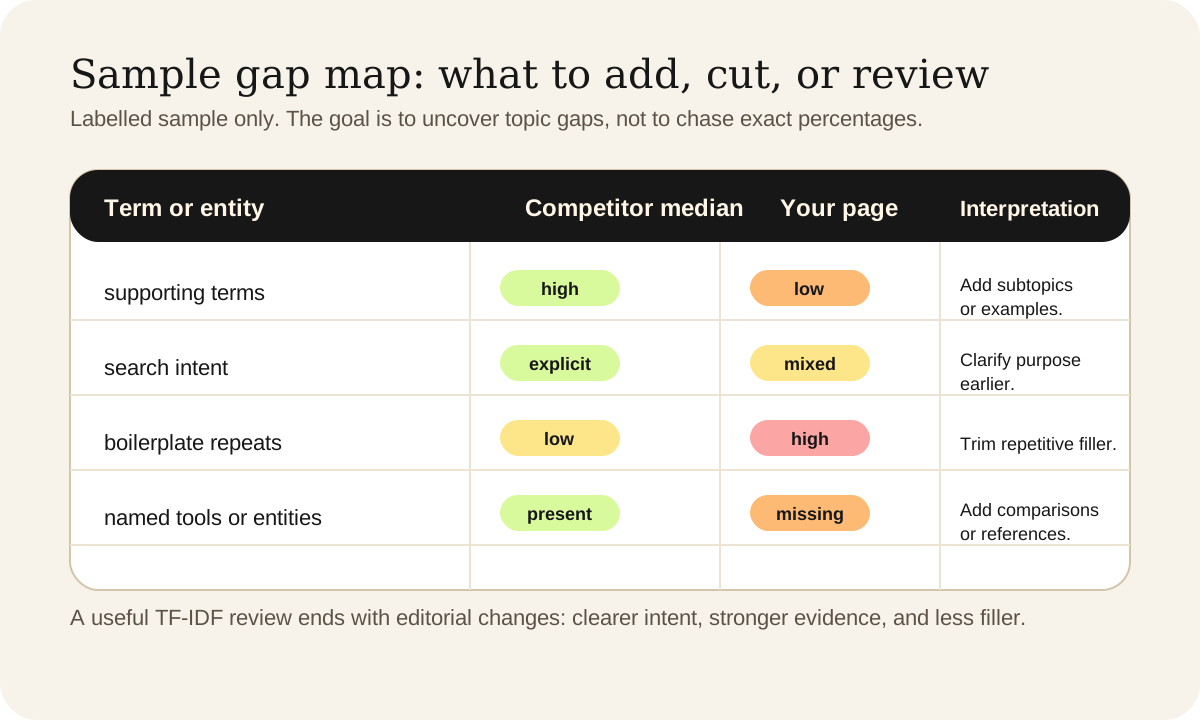
A sample review output
A useful report does not just dump weighted terms. It helps you decide what to add, what to trim, and what needs a manual intent review.
| Signal | Action |
|---|---|
| rendered HTML Competitor: Common · Your page: Weak | Add a section explaining why rendered output matters for analysis. |
| supporting entities Competitor: Common · Your page: Missing | Include the tools, sources, and concepts readers expect to see on this topic. |
| keyword density Competitor: Moderate · Your page: Overused | Trim repetitive density language and replace it with practical guidance. |
| content gap workflow Competitor: Common · Your page: Weak | Show the actual review process so the page becomes more actionable. |
Use TF-IDF as a judgment tool, not a ranking myth
What TF-IDF helps with
- • Finding missing supporting concepts in a comparable SERP set
- • Spotting repeated boilerplate that inflates low-value terms
- • Turning a content refresh into a concrete editing checklist
What TF-IDF does not prove
- • It is not a published Google ranking factor or target score
- • It does not replace search intent review, technical SEO, or editorial judgment
- • It should not be used to force exact-match term frequency into every paragraph
Where TF-IDF fits in the wider workflow
Run TF-IDF after the page is technically healthy and before you do the final rewrite. It pairs well with Technical SEO, Keyword Analysis, Schema Markup, and our guides on KGR Analysis and Advanced Technical SEO.
If the page still reads awkwardly after the analysis, the problem is usually not “more keywords.” It is usually weak intent alignment, thin examples, or filler language that needs an editor, not a formula.
References behind this page
We position TF-IDF as a practical text-analysis method, not as a guaranteed ranking lever. These sources matter because they explain the algorithm itself, modern retrieval realities, and Google’s guidance on helpful, non-spammy content.
FAQ
Is TF-IDF still useful for SEO in 2026?
Yes, when you use it as a content-gap heuristic. It is useful for comparing comparable documents and spotting missing support topics, but it is not a ranking shortcut.
Should I optimize toward a specific TF-IDF score?
No. A fixed target usually leads to awkward copy. Use the output to guide human edits, not to chase a density threshold.
What pages should I compare?
Compare pages with the same job to be done. A product page, a glossary definition, and a how-to guide should not be mixed into one corpus if they serve different intent.
What should I do after the term analysis?
Review the page manually, update headings, add missing examples or entities, tighten repetitive sections, and check the page again with your technical and content workflows.
Ready to turn TF-IDF into better edits?
Start with a live page audit, compare the page against the right query set, and use the output to improve topic coverage instead of forcing keyword density.