Google's Official AI SEO Guide: What Website Owners Really Need to Know in 2026

Google has published three critical documents that every website owner, SEO professional, and content creator should understand. These aren’t third-party opinions or industry speculation — they are Google’s own official guidance on how AI-driven search works and what you should (and shouldn’t) do about it.
In this article, we’ve done a thorough analysis of all three documents to extract the real insights, separate fact from fiction, and give you actionable takeaways for 2026 and beyond.
The Three Documents We Analyzed
- AI Optimization Guide — Google’s comprehensive guide on succeeding in generative AI features like AI Overviews and AI Mode
- Using Generative AI Content — Official guidance on using AI tools for content creation
- Google Search and AI Content (Blog) — The foundational post explaining Google’s philosophy on AI-generated content
Let’s break down what each one tells us and what it means for your SEO strategy.
Core Finding #1: SEO Is Still Fundamentally Relevant
The most important takeaway from Google’s AI Optimization Guide is direct and unambiguous:
“The best practices for SEO continue to be relevant because our generative AI features on Google Search are rooted in our core Search ranking and quality systems.”
This matters because it debunks the widespread narrative that “SEO is dead” in the age of AI. Google’s generative AI features — including AI Overviews and AI Mode — don’t operate on a separate ranking system. They rely on the same indexing, crawling, and quality signals that traditional search uses.
How Google’s AI Features Actually Work
Google explains two key technical mechanisms:
Retrieval-Augmented Generation (RAG): Google’s AI systems use RAG (also called grounding) to improve response quality. The process works like this:
- Google’s core ranking systems retrieve relevant, up-to-date web pages from the search index
- AI systems review the specific information from those retrieved pages
- A response is generated based on that retrieved information
- Prominent, clickable links to source pages are shown alongside the response
This means your page still needs to be indexed, rank well, and provide quality content to appear in AI-generated responses. The fundamentals of crawling, indexing, and content quality remain the foundation.
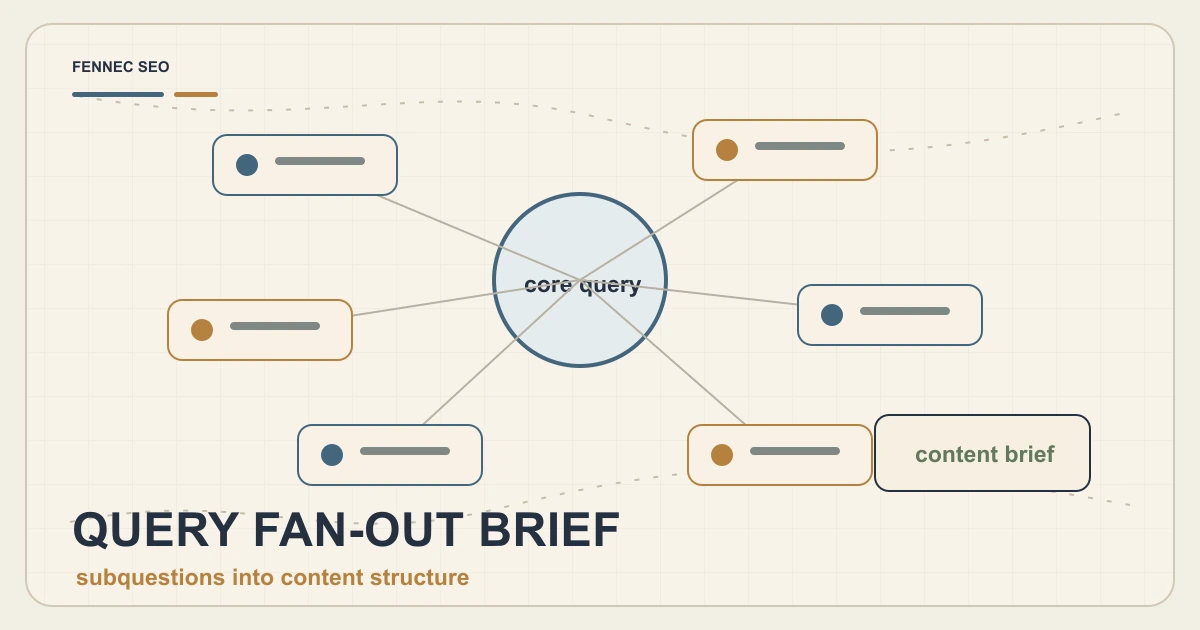
Query Fan-out: Google’s AI generates multiple concurrent, related queries to fetch additional relevant results. For example, a query about “how to fix a weedy lawn” might trigger fan-out queries like “best herbicides for lawns,” “remove weeds without chemicals,” and “how to prevent weeds in lawn.”
This has a direct implication: your content doesn’t need to target every possible query variation. Google’s systems are sophisticated enough to understand page relevance even without exact keyword matches — a capability that’s evolved significantly since BERT’s introduction.
Core Finding #2: Content Quality Matters More Than Ever
Google’s guidance on content for AI search is perhaps the most detailed and actionable part of their documentation. The central principle is simple but profound: create valuable, non-commodity content.
What Is “Non-Commodity Content”?
Google draws a clear distinction:
- Commodity content: Based on common knowledge that could come from anyone or be easily produced by AI. Example: “7 Tips for First-Time Homebuyers”
- Non-commodity content: Provides unique expert or experienced perspectives that go beyond common knowledge. Example: “Why We Waived the Inspection & Saved Money: A Look Inside the Sewer Line”
This distinction is critical because generative AI models can easily reproduce commodity content. What they cannot replicate is your unique experience, expertise, and point of view.
The Five Attributes of AI-Ready Content
Google identifies five specific attributes that make content valuable in AI search:
-
Unique point of view: First-hand reviews and personal experiences stand out. Don’t recycle what others have already said.
-
Helpful, reliable, people-first content: Follow Google’s content quality guidelines and demonstrate E-E-A-T — Experience, Expertise, Authoritativeness, and Trustworthiness.
-
Clear organization: Write for humans first. Use paragraphs, sections, and headings that provide clear structure. This also helps AI systems parse and understand your content.
-
High-quality images and video: AI search features can surface images and video alongside text links, creating more opportunities for your content to appear. Follow Google’s image SEO and video SEO best practices.
-
Focus on user satisfaction, not query manipulation: Don’t create separate content for every query variation. This violates Google’s scaled content abuse policy and is an ineffective long-term strategy.
Core Finding #3: Technical SEO Foundations Are Unchanged
Google’s guidance is clear: all existing technical SEO best practices continue to be worthwhile for AI search visibility. Here’s what matters:
Technical Requirements for AI Search Eligibility
- Pages must be indexed and eligible for snippets: To appear in generative AI features, your page must meet Google’s technical requirements
- Content must be crawlable: AI models use publicly accessible, crawlable content. Follow crawling best practices and optimize your crawl budget for large sites
- JavaScript must follow SEO best practices: Google can process JavaScript content, but working with JS frameworks adds complexity. Follow JavaScript SEO guidelines
- Good page experience matters: Ensure your site displays well across devices, reduces latency, and makes main content distinguishable from other elements
Semantic HTML and Accessibility
Google specifically mentions that semantic HTML helps screen readers and other accessibility tools parse your content. While perfectly valid HTML isn’t required, using semantic elements when possible improves accessibility — which becomes increasingly important as agentic AI experiences emerge.
Core Finding #4: What You DON’T Need to Do (Mythbusting)
This is perhaps the most valuable section of Google’s guidance. As AI search has evolved, so have the misconceptions. Google explicitly addresses several popular “optimization” strategies that don’t work:
LLMs.txt and “Special” AI Markup
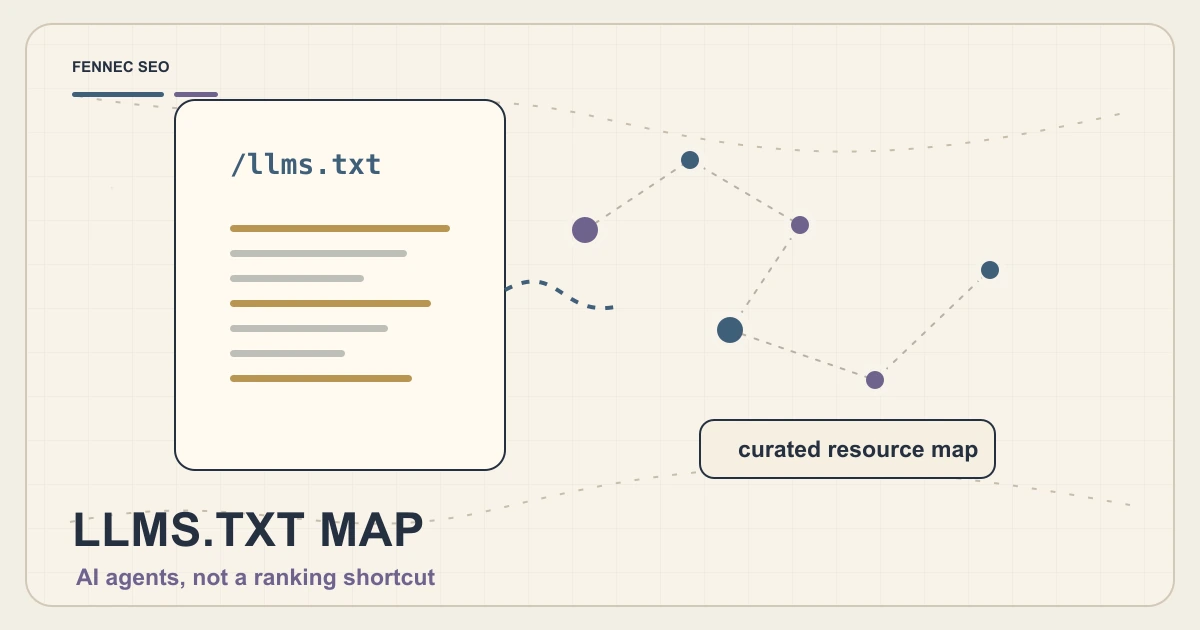
“You don’t need to create new machine readable files, AI text files, markup, or Markdown to appear in generative AI search.”
Despite the industry buzz around LLMs.txt files, Google confirms they don’t need special AI-oriented markup. Google’s crawlers already discover, crawl, and index many file types. Creating separate AI-specific files is unnecessary.
Answer Engine Optimization (AEO) and Generative Engine Optimization (GEO) “Hacks”
While these terms are common online, Google makes it clear that many suggested “hacks” aren’t effective. The focus should remain on foundational SEO practices rather than trying to game AI-specific features.
For a deeper understanding of Generative Engine Optimization, our wiki covers the legitimate strategies that align with Google’s guidance.
Creating Content for Every Query Variation
Google warns against creating separate pages for every possible search variation, especially fan-out queries. This primarily violates the scaled content abuse spam policy and doesn’t improve site quality.
Over-Optimizing for AI Systems
Don’t write content specifically for AI consumption. Write for your human audience. Google’s systems are designed to connect people with useful, satisfying information — if your content serves humans well, it will serve AI systems well too.
Core Finding #5: Google’s Philosophy on AI-Generated Content
The 2023 blog post and the using-gen-ai-content guidance establish Google’s consistent philosophy:
Quality Over Production Method
“Google’s ranking systems aim to reward original, high-quality content that demonstrates qualities of what we call E-E-A-T: expertise, experience, authoritativeness, and trustworthiness.”
Google’s focus is on content quality, not how content is produced. This is a crucial distinction that many creators misunderstand.
When AI Content Is Acceptable
Google explicitly states that not all AI-generated content is spam:
- Acceptable: Using AI to assist in creating helpful, original content
- Unacceptable: Using AI to generate content primarily to manipulate search rankings
Google has years of experience dealing with automation used to game search results, including their SpamBrain system. These systems analyze patterns and signals to identify spam regardless of how it’s produced.
Practical Guidance for AI-Assisted Content Creation
Google provides specific recommendations:
- Meet Search Essentials standards: Ensure your work complies with Search Essentials and spam policies
- Focus on accuracy, quality, and relevance: This includes metadata like title elements, meta descriptions, structured data, and image alt texts
- Give users context: Share information about how content was created, especially when automation is involved
- Consider the “Who, How, and Why” framework: Evaluate who created the content, how it was created, and why it was created
Agentic Search: The Emerging Frontier
Google’s AI Optimization Guide introduces the concept of agentic experiences — AI agents that can act on behalf of users to complete tasks. This is a significant evolution beyond simple search and answer generation.
What This Means for Website Owners
As AI agents become more capable, they’ll need to:
- Parse and navigate web pages effectively
- Extract structured information from your content
- Understand your site’s organization and hierarchy
This makes semantic HTML, clear content structure, and good internal linking practices even more important. AI agents will rely on these signals to understand and interact with your content.
Preparing for Agentic Search
While agentic search is still emerging, you can prepare by:
- Using semantic HTML elements (headings, lists, tables) appropriately
- Maintaining clear site navigation and hierarchy
- Providing structured data where relevant
- Ensuring content is accessible and well-organized
Actionable Takeaways for 2026
Based on our analysis of all three Google documents, here are the concrete actions you should take:
Do These Things
- Create unique, experience-based content that AI models cannot easily replicate
- Maintain strong technical SEO foundations — crawling, indexing, page speed, mobile optimization
- Demonstrate E-E-A-T through author bylines, credentials, and transparent content creation processes
- Use AI as an assistant, not a replacement for original thinking and expertise
- Provide context about how your content was created, especially when AI tools were involved
- Optimize images and video for additional visibility in AI search features
- Use Google Search Console to verify your site and monitor technical health
Don’t Do These Things
- Don’t create LLMs.txt files or other AI-specific markup — Google doesn’t need them
- Don’t chase AEO/GEO “hacks” — focus on foundational SEO instead
- Don’t create content for every query variation — this violates spam policies
- Don’t use AI to mass-produce low-value content — this is scaled content abuse
- Don’t list AI as the author of your content — be transparent about human involvement
- Don’t over-optimize for AI systems — write for humans first
The Bottom Line
Google’s official guidance is remarkably consistent across all three documents: the fundamentals of good SEO and content quality remain the most important factors for success in AI-driven search.
The rise of generative AI features doesn’t change the core principles of creating valuable, well-structured, technically sound content. What it does change is the emphasis on uniqueness and experience-based perspectives — because commodity content is exactly what AI models can reproduce most easily.
For website owners and SEO professionals, the message is clear: double down on what makes your content uniquely valuable, maintain strong technical foundations, and ignore the noise around AI-specific optimization tricks. The fundamentals still work.
Want to audit your site’s SEO health and ensure you’re following these best practices? Try Fennec SEO — our free tool helps you identify technical issues, content opportunities, and optimization priorities directly from your browser.