Gemini brings Search into home-screen widgets: what should stores prepare?

A customer may see a trip, spending summary or event update on their home screen without opening a search box. For an independent store, the development worth watching is distribution beyond the search results page. The announcement does not quantify lost website clicks or provide a general merchant application route into widgets.
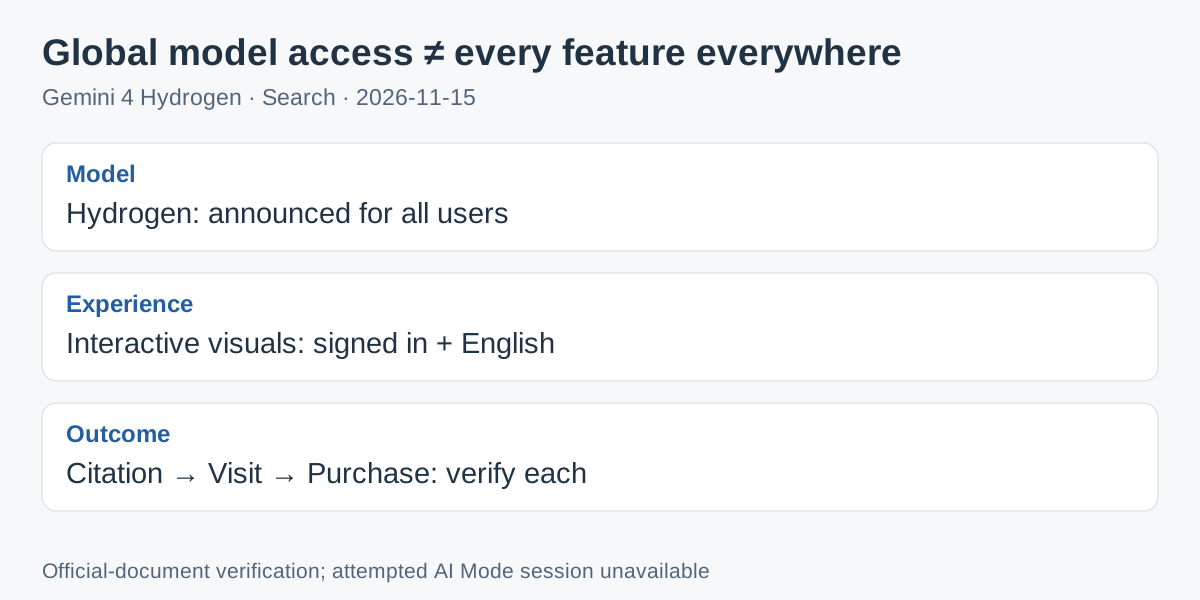
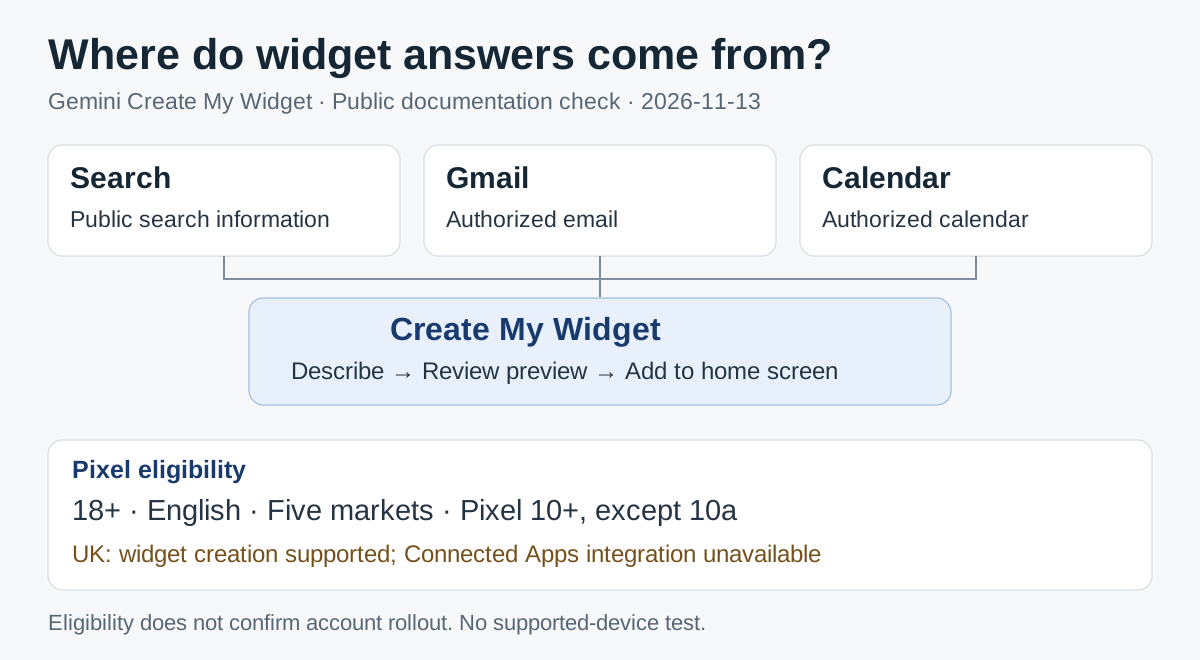
Google announced the Gemini Intelligence expansion on November 10, 2026. Our November 13 cross-check of official announcements and help pages found an important distinction: UK users can create Pixel widgets, while their Gemini Connected Apps integration is unavailable. Country support does not imply every personal-data capability works there. This article reports firsthand public-document verification, not a test on supported hardware.
What is expanding, and when?
The announcement covers five capabilities with different requirements.
| Capability | Purpose | Boundary |
|---|---|---|
| Rambler | Organize dictation in Gboard | Expanding to Pixel 10 devices and others; usage limits apply |
| App task automation | Help with food, rides and reservations in supported apps | Adds the UK, India and Japan; not every merchant |
| Create My Widget | Generate widgets using Gmail, Calendar and Search | Rolling out over the coming weeks |
| Device Assistance | Manage settings, storage and permissions conversationally | Selected Android 17+ devices |
| Android Auto suggestions | Suggest replies using messages and confirmation emails | Coming soon; setup, age, country and language restrictions |
US preorders for motorola signature 27 begin November 19, after our verification date. Future support is not current availability. The November Pixel Drop also describes a rollout lasting weeks and forthcoming widgets for Pixel Watch 4 and 5.
Create My Widget itself is older than this update: Google described prompt-generated widgets in its May 12 announcement. The November story adds reach and explicitly named data sources. It does not explain how a website’s structured data would be selected for a widget or establish a new schema display feature.
Can a small store use it, and what does it cost?
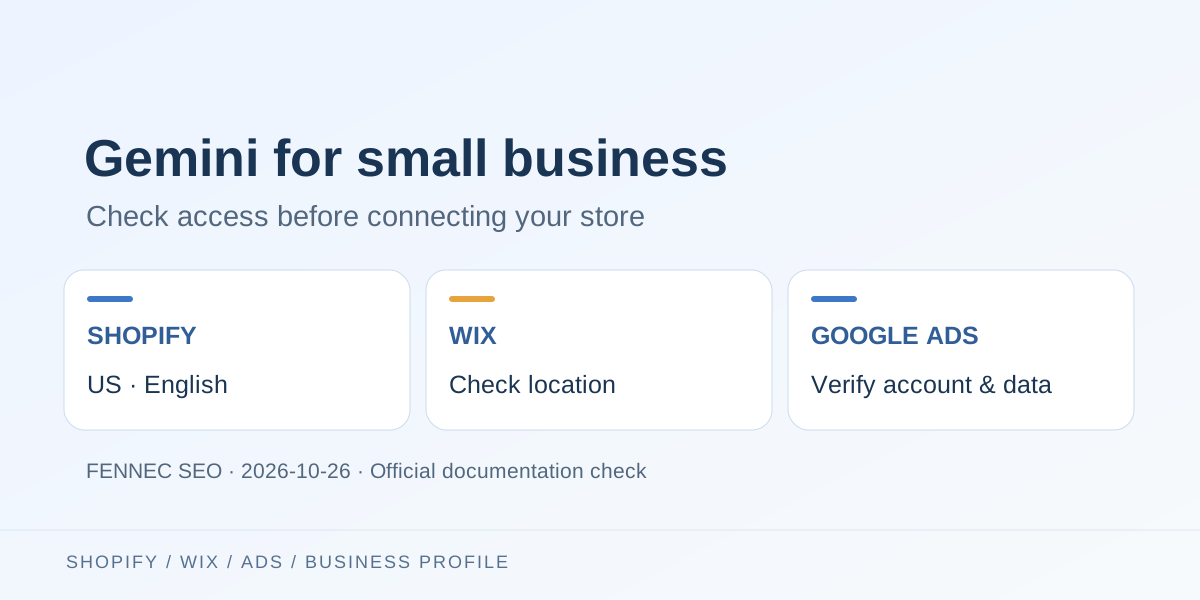
Separate the merchant’s location from the customer’s eligibility. A consumer support list is not a merchant admission policy.
| Question | Publicly documented position on November 13 |
|---|---|
| Pixel eligibility | Age 18+, Pixel 10 or newer, excluding Pixel 10a |
| Language and markets | English; Australia, Canada, India, US and UK |
| UK personal-data integration | Gemini Connected Apps integration unavailable |
| Personal data access | Requires connecting services and relevant permissions |
| Price | Higher usage may require a subscription; no widget-specific price, allowance or refresh schedule stated |
These details come from Pixel help. Its instruction to connect Google Workspace does not establish eligibility for every enterprise account. Neither Chinese nor Japan appears in this Pixel widget scope; Japan’s task automation expansion is a separate feature.
Googlebook help lists English and the same five markets, with a desktop right-click → Browse widgets → Create entry. Do not automatically transfer every device-specific limitation to another platform. The checked pages do not establish each account’s activation date, latency or uptime.
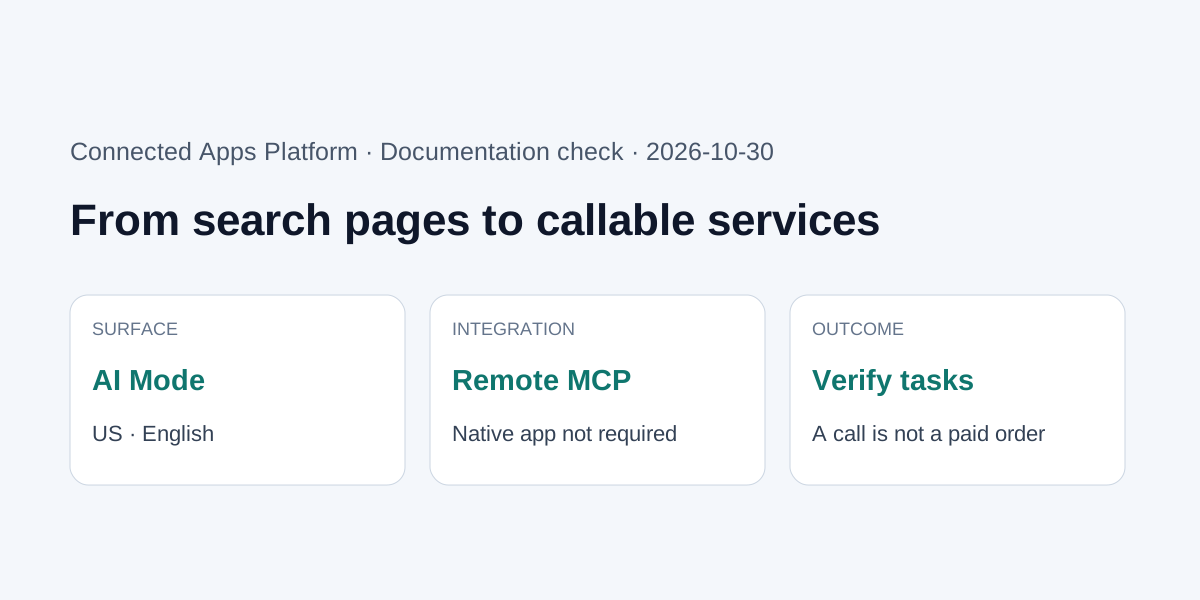
A store without an app has no established reason to build a native app just for this announcement. Publishing a callable proprietary service is a separate decision covered in our Connected Apps Platform check.
An additional distribution surface, with no announced ranking rule
Search, email and calendar information can contribute to a personal interface, but they perform different roles:
- Public search information: the announcement does not guarantee source links or explain how a website gets selected.
- Authorized email and calendar data: an order confirmation or appointment may already contain the relevant information. Its clarity is a service communication issue as well as a discovery issue.
- App execution: Google’s task automation help distinguishes screen automation from Connected Apps and describes confirmation and final user steps. A suggestion, prepared order and completed payment are separate outcomes.
An assistant becoming an earlier point of access is a reasonable planning scenario. The disappearance of search boxes or guaranteed protection for transactional pages is not established. Product comparisons, bookings and purchases can also involve assistants. Prioritize the distinctive value a page provides, rather than assuming its intent label protects its traffic.
Keep brand names, company identity and product identifiers consistent. That reduces ambiguity, but this update announces no increase in Organization, Product or sameAs ranking weight. Search Central says AI Overviews and AI Mode need no special schema; that guidance is not a widget eligibility specification. Our author and brand identity checks support verifiable identity work. This news provides no reason to buy encyclopedia entries or manufactured endorsements.
Make the information handoff accurate
Audit three customer tasks: comparing before purchase, checking an order, and finding an appointment location. Compare names, amounts, currencies, time zones and status across pages, product data, emails and calendars. “Dispatches 3–5 business days after payment” must not become “arrives in 3–5 days” in the confirmation. Fixing that inconsistency is useful independently; any effect on widget output requires testing.
Use the price, stock and variant consistency audit for product facts. Give content verifiable photographs, test conditions, comparison data, limitations and update dates. Explain modification, cancellation and human support for appointments and orders. Those details offer more practical value than a large volume of generic questions and answers.
Advertising decisions still need transaction evidence. This announcement introduces no widget ad inventory, bidding rules or merchant attribution report. Do not count a desktop answer as an ad impression or attribute every increase in direct visits and branded searches to Gemini. Track branded and non-branded queries, identifiable referrals, orders and customer feedback separately. Preserve unknown sources; do not relabel GSC Web metrics as widget traffic.
Use separate test data for personal-data checks. Do not upload customer inboxes, credentials or real orders. Grant only necessary access, test revocation, and redact screenshots or shared chats. Google’s automation help warns against entering login or payment details directly in chat and acknowledges possible unintended actions. The widget announcement does not settle all advertising data-use questions; it cannot support categorical claims that email data always, or never, informs ads.
A useful test once supported hardware is available
This is a proposed acceptance procedure, not completed test results. Record date, country, language, device, OS/app versions, subscription and permissions. On Pixel, start by holding an empty home-screen area, then Widgets → Create → describe → review → Add. Use fictional orders and appointments without real transactions.
| Test | Evidence to record | What it cannot establish |
|---|---|---|
| Request a public event’s time and its source | Time, time zone and any clickable citation | Guaranteed distribution for every website |
| Connect test email and request a fictional order’s amount/date | Correct order and currency | Permission to place an order |
| Send an explicit appointment change and update its calendar entry | Old/new values, refresh time and admitted uncertainty | A fixed refresh SLA |
| Revoke access and repeat | Stale output or permission warning | Deletion of all previously held data |
| Follow any displayed link | Correct destination and identifiable referral | A completed order or incremental revenue |
UK Pixel users must account for the documented integration restriction. Record an ineligible test as unavailable, rather than diagnosing a store SEO failure. Verify public answers too; asking for a citation does not guarantee one.
For a three-year content plan, reserve a measurable assistant-distribution scenario alongside product experience, original evidence, tools and customer relationships. Recheck eligibility, source visibility and actual conversions by market and task each quarter before expanding investment. The immediate work is reducing conflicting information and collecting evidence. Google has not documented a widget optimization shortcut.