Agent SEO Audit: What IsItAgentReady Checks and How to Use It for GEO

AI SEO and GEO usually focus on visibility in answers. Agent SEO asks a more operational question:
Can an AI agent discover your site, understand the important resources, read the content efficiently, respect your access policy, and complete a useful task?
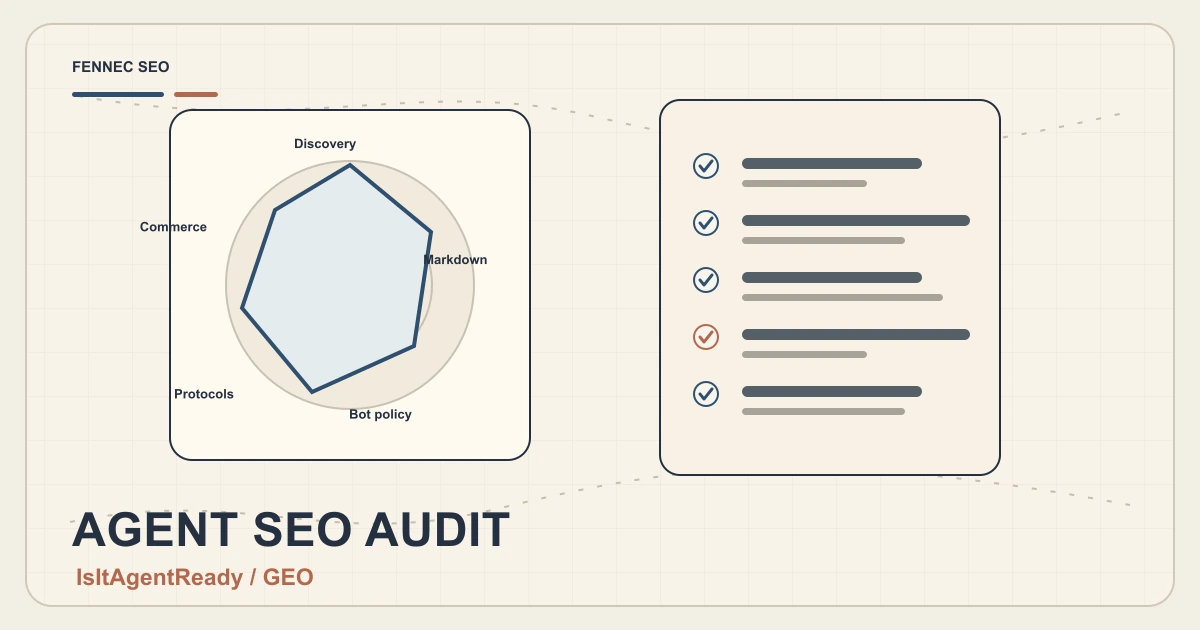
That is why IsItAgentReady is worth studying. The Cloudflare-built scanner is not just another SEO scorecard. It treats agent readiness as a stack of practical checks across discovery, content access, bot policy, protocol discovery, and commerce.
For SEO teams, this creates a useful topic cluster: not “how do I hack AI Overviews,” but “how do I make a website understandable and usable by agents?”
If you want the product workflow instead of the strategy guide, start with the FennecSEO Agent SEO audit page.
Agent SEO vs AI SEO vs GEO
The terms overlap, but they should not be used as if they mean the same thing.
| Term | Main question | Typical work |
|---|---|---|
| AI SEO | Can search systems using AI understand and rank the page? | Technical SEO, helpful content, entity coverage, structured data |
| GEO | Can generative engines cite, summarize, or mention the brand? | Source-worthy content, answer formatting, entity authority, citation monitoring |
| Agent SEO | Can autonomous agents discover, read, verify, and act on the site? | robots.txt, sitemaps, Link headers, Markdown access, API discovery, MCP, auth, forms |
Google’s current guidance still says the foundation for generative AI visibility is normal SEO: clear technical structure and unique, useful, people-first content. It also says special files such as llms.txt or Markdown are not required for Google Search visibility.
Agent SEO is different. It is not a Google ranking requirement. It is preparation for tools that browse, inspect the DOM, read accessibility trees, call APIs, and complete tasks for users.
What IsItAgentReady Actually Tests
IsItAgentReady organizes checks into areas that map neatly to a modern Agent SEO audit.
| Area | What it checks | Why it matters |
|---|---|---|
| Discoverability | robots.txt, sitemap, Link headers, DNS-AID | Agents need obvious entry points before they can reason over a site |
| Content accessibility | Markdown content negotiation | Clean Markdown can reduce extraction cost and ambiguity |
| Bot access control | AI bot rules, Content Signals, Web Bot Auth | Sites need policy and identity controls, not just traffic volume |
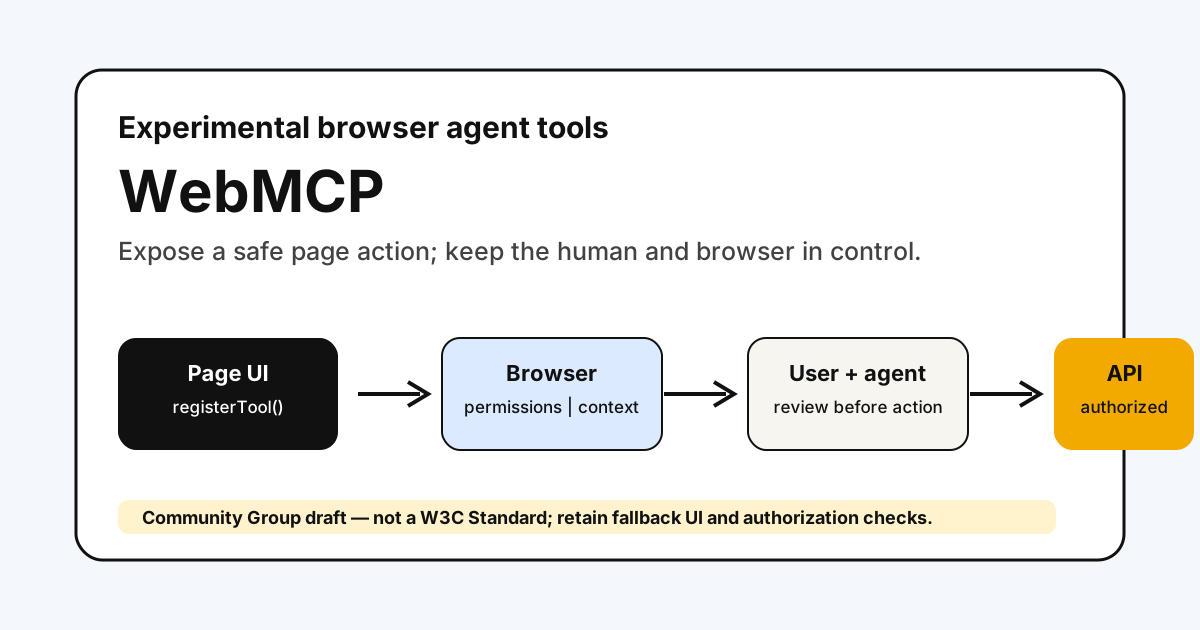
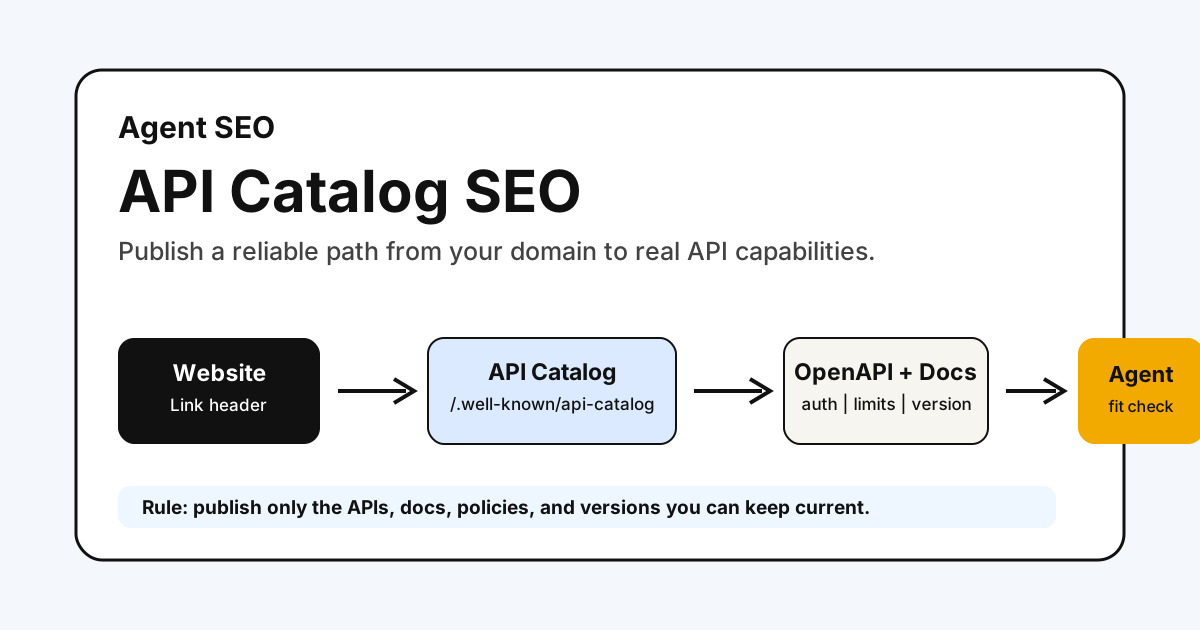
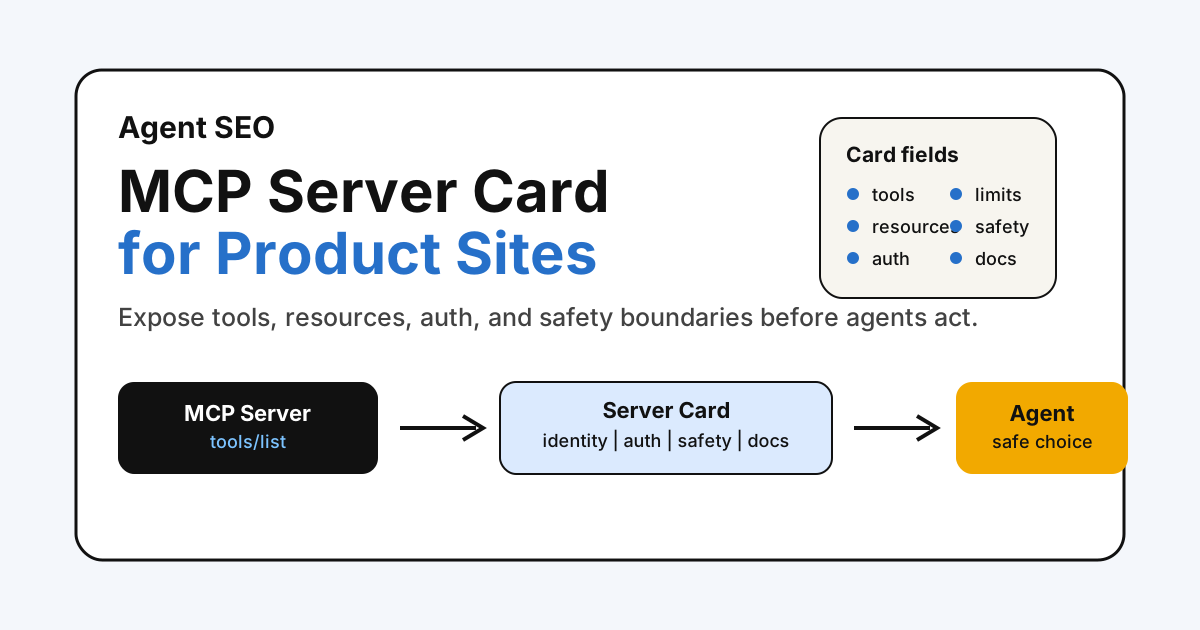
| Protocol discovery | API Catalog, OAuth metadata, MCP Server Card, Agent Skills, WebMCP | Agents need structured ways to discover real capabilities |
| Commerce | x402, UCP, ACP, MPP | Transactional agents need payment and commerce flows |
This is a wider lens than classic SEO. A page can rank well and still be hard for an agent to use if the site lacks stable discovery, machine-readable context, usable forms, or clear content access rules.
The Agent SEO Cluster To Build First
The strongest cluster is not “GEO definition.” That topic is already crowded and often vague. A better cluster for Fennec SEO is:
Agent-ready SEO for websites: discovery, content extraction, crawler policy, and verification.
This cluster can support practical articles such as:
- Agent readiness audits and scoring
- Markdown for Agents and llms.txt
- Content Signals and AI bot access control
- AI crawler testing
- Agent-friendly website audits
- Bot simulation and rendered DOM checks
- API Catalog and MCP discovery for SaaS products with real public endpoints
That cluster ties AI SEO, GEO, and technical SEO together without pretending that every emerging file is a ranking factor.
Layer 1: Discovery
Agents still need crawlable paths.
Start with the basics:
- A valid
robots.txt - A sitemap directive in
robots.txt - XML sitemaps with canonical URLs
- HTML links to important resources
- Link headers for well-known machine resources
The interesting part is the Link header. IsItAgentReady looks for agent-useful relations, such as an API catalog for real API metadata or descriptive resources such as llms.txt. That means an agent can discover key files from the HTTP response itself, before parsing a full page.
For example:
Link: </.well-known/api-catalog>; rel="api-catalog"; type="application/linkset+json"
Link: </llms.txt>; rel="describedby"; type="text/plain"
This does not replace navigation or internal links. It gives agents another reliable starting point.
Layer 2: Content Access
HTML is great for browsers. Agents often prefer cleaner representations.
Markdown content negotiation means the server can return Markdown when the request includes:
Accept: text/markdown
This is different from publishing llms.txt. A root llms.txt can be a curated map of important resources. Markdown negotiation can expose each page in a cleaner format.
For SEO, the key is not to create a hidden second version of the site. The Markdown output should reflect the same canonical content humans see in HTML.
Use this rule:
Markdown for agents should clarify your content, not create a parallel truth.
Layer 3: Bot Policy
Robots rules are no longer only about indexing. They now overlap with content licensing, model training preferences, and AI answer generation.
Cloudflare’s Content Signals split content use into three categories:
search: use for search indexes and linked resultsai-input: use as real-time input for AI answers, grounding, or RAGai-train: use for model training or fine-tuning
A publisher might allow search and AI input, but disallow training:
User-agent: *
Content-Signal: search=yes, ai-input=yes, ai-train=no
Allow: /
This is a preference signal, not a force field. It should be paired with logs, bot controls, and business policy.
For deeper policy work, read Content Signals and AI Bot Access.
Layer 4: Protocol Discovery
This is where Agent SEO starts to move beyond publishing.
If your site has tools, accounts, APIs, or workflows, agents need to know what they can do and how to authenticate. IsItAgentReady checks for signals such as:
- API Catalog at
/.well-known/api-catalog - OAuth discovery metadata
- OAuth protected resource metadata
- MCP Server Card
- Agent Skills index
- WebMCP
Most content sites do not need every protocol. A SaaS product with public APIs, however, should treat capability discovery as a product surface.
For Fennec SEO, the practical first step is not to stuff every public resource into API Catalog. Use sitemaps, llms.txt, RSS, and Link headers for resource discovery. Use API Catalog only when there is actual API or endpoint metadata to advertise. MCP can come later if there are real agent-callable tools to expose.
Layer 5: Verification
An Agent SEO audit is not complete until you test it.
Use a repeatable workflow:
- Fetch the homepage normally.
- Fetch the homepage with
Accept: text/markdown. - Fetch
robots.txt, sitemap,llms.txt, and well-known files. - Run a bot simulation for important URLs.
- Compare raw HTML, rendered DOM, and visible content.
- Check whether internal links point to the agent-ready resources.
- Re-scan with IsItAgentReady after deployment.
This is where Fennec Bot Simulator and a technical SEO audit fit naturally into the workflow.
What Not To Do
Avoid turning Agent SEO into another pile of hacks.
Do not:
- Add llms.txt and ignore broken canonical tags
- Publish Markdown that differs from the HTML page
- Block AI crawlers without understanding search impact
- Add MCP discovery when there is no actual tool or endpoint
- Treat a scanner score as the only business metric
- Confuse Google Search visibility with every agent ecosystem
Agent readiness is useful because it makes technical assumptions visible. It is not a shortcut around content quality.
Takeaway
Agent SEO is the bridge between technical SEO, GEO, accessibility, content operations, and product integration.
The right starting cluster is practical: make the site discoverable, readable, policy-aware, and testable. IsItAgentReady gives a useful scorecard for that work, but the durable advantage comes from building a site that agents and humans can both understand.
Sources
- Is Your Site Agent-Ready?
- Cloudflare: Introducing the Agent Readiness score
- Google Search Central: AI optimization guide
- Cloudflare Docs: Markdown for Agents
- Cloudflare Docs: managed robots.txt and Content Signals
- IETF RFC 9727: api-catalog Link Relation Type
- Model Context Protocol: What is MCP?
Q&A
Is Agent SEO the same as GEO?
No. GEO focuses on being cited or synthesized by generative search systems. Agent SEO is broader: it asks whether agents can discover, read, trust, and act on a site.
What is the fastest Agent SEO win?
Start with crawlable robots.txt and sitemaps, then add useful Link headers and a maintained llms.txt or Markdown access layer for agents.
What does IsItAgentReady check?
It checks discovery signals, Markdown access, AI bot policy, protocol discovery, commerce readiness, and related agent-facing standards.
Do content sites need MCP?
Usually no. Content sites should prioritize crawlability, llms.txt, Markdown access, and clear policy signals before adding MCP. MCP makes sense when there are real agent-callable tools or APIs.