AI Overview Citation Audit: Are Your Pages Source-Worthy?

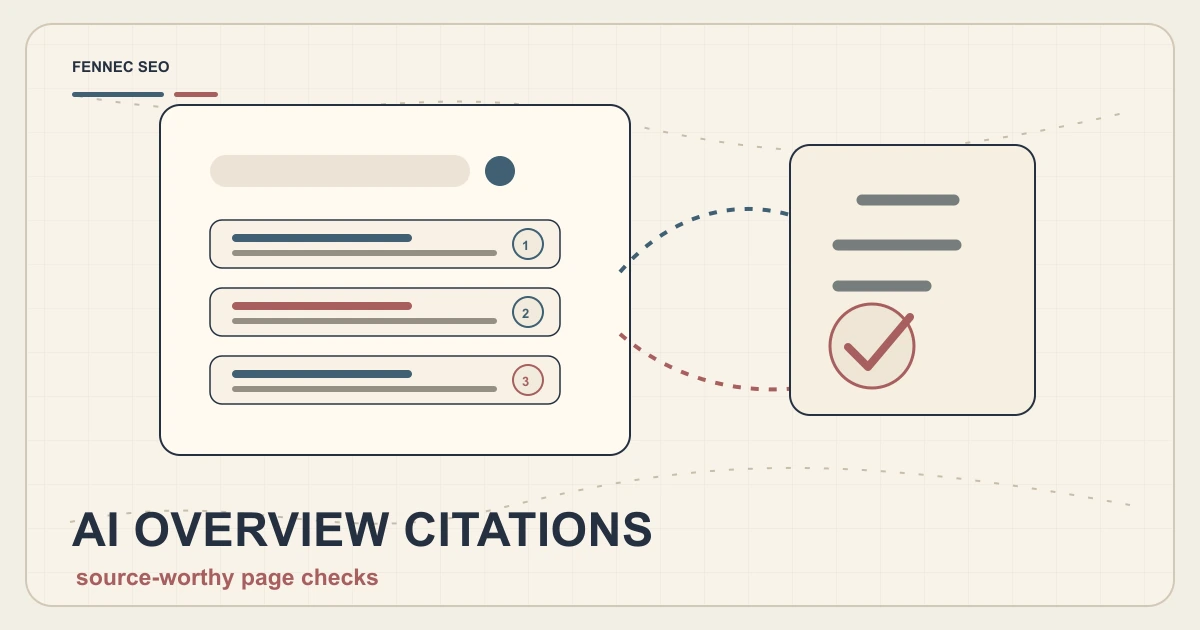
AI Overview citations are not a prize you can force. They are a signal that a page was useful enough to support an answer for a particular search.
That means the right audit question is not “How do we hack citations?”
The right question is:
Would this page be a reliable source if an AI search system needed to answer this user problem?
This audit gives SEO teams a practical way to review pages for source-worthiness while staying aligned with Google’s AI optimization guide.
If the destination is a download, pricing or help page, also run the official task-page audit. A reliable explanation and a working route to the user’s next action are separate checks.
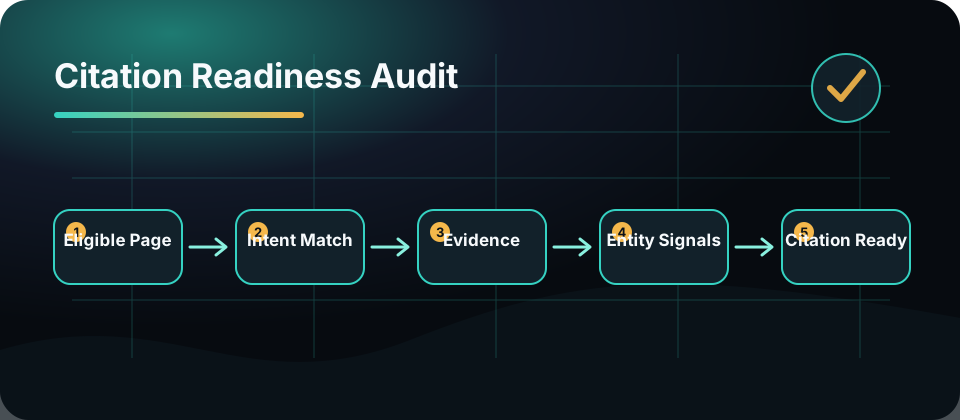
Step 1: Confirm Search Eligibility
Start with basics. A page cannot become a useful search source if it is hard to crawl, blocked, duplicated, or technically confusing.
Check:
- The page returns HTTP 200
- It is not blocked by robots.txt or noindex
- The canonical URL is correct
- The primary content is visible after rendering
- The title and H1 describe the same topic
- The page has enough unique body content
- Internal links point to and from related pages
Use Fennec SEO’s technical audit and canonical checker before reviewing content quality. Technical ambiguity wastes editorial effort.
Step 2: Map The Real Question
AI Overviews are usually triggered by questions, decisions, comparisons, and multi-step tasks.
For each target page, write one sentence:
This page helps a user decide / diagnose / compare / learn / complete _____.
Examples:
- “This page helps a site owner diagnose why AI search clicks are declining.”
- “This page helps an SEO decide whether to block GPTBot.”
- “This page helps a developer compare raw HTML and rendered DOM for JavaScript SEO.”
If the sentence is vague, the page is probably vague too.
Step 3: Check The Direct Answer
A source-worthy page should answer the primary question early. Do not bury the answer under a long history lesson.
Review the first screen:
- Does the intro state the practical takeaway?
- Does the first H2 match the user’s next question?
- Is there a short definition if the topic is technical?
- Does the article avoid empty trend language?
- Is the recommended action clear?
For product-led pages, link the action naturally. For example, a citation audit article can point users to AI Overview optimization and GSC management without sounding like an ad.
Step 4: Look For Original Evidence
Google’s guidance repeatedly pushes away from commodity content. A page that only repeats common advice is easy to replace.
Add at least one original layer:
- A workflow your team actually uses
- A checklist based on real audits
- A before-and-after example
- A decision table
- A product screenshot or observed issue
- A named author perspective
- A source comparison
Originality does not require a giant study. It requires something the next generic article does not have.
Step 5: Validate Sources
AI search pages should be source-clean. Link to primary references when possible:
- Google Search Central for Search behavior
- Official crawler documentation for bot rules
- Web.dev for web platform and UX guidance
- Vendor docs for product-specific behavior
- Your own tested examples for tool workflows
Avoid building the article around unsourced screenshots of AI answers. They can be useful examples, but they change too often to be the foundation.
Step 6: Strengthen The Cluster
A page is more source-worthy when it sits inside a coherent topic cluster.
For an AI Overview citation cluster, connect:
- AI search measurement
- Query fan-out content planning
- Technical eligibility
- Bot simulation
- Structured data
- JavaScript rendering
- Content refresh workflow
Relevant Fennec pages:
Internal links help users continue the task and help search engines understand topical depth.
Step 7: Audit Snippet Quality
AI search does not remove classic snippet work.
Check:
- Title is specific, not clever
- Meta description explains the outcome
- H2s can stand alone
- Tables summarize decisions
- FAQ answers are short and factual
- Images have descriptive alt text
Good snippets make it easier for humans and machines to understand the page’s role.
A Simple Scoring Model
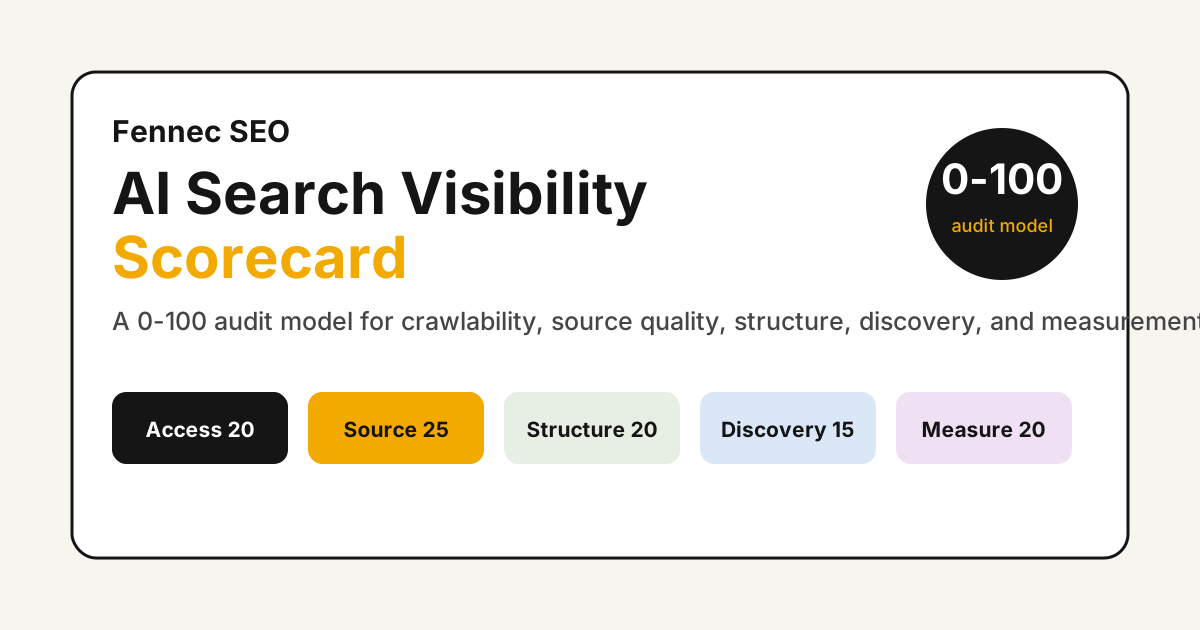
Use a 0 to 2 score for each area:
| Area | 0 | 1 | 2 |
|---|---|---|---|
| Technical eligibility | Blocked or confusing | Mostly eligible | Clean and verified |
| Direct answer | Buried | Present but weak | Clear near the top |
| Original value | Generic | Some examples | Strong evidence or workflow |
| Source quality | Few or weak links | Mixed | Primary sources and tested examples |
| Cluster fit | Isolated | Some links | Strong hub-and-spoke placement |
Pages scoring under 7 should be refreshed before you expect them to support AI search visibility.
Takeaway
An AI Overview citation audit is really a source-worthiness audit.
Do not chase every screenshot. Make the page technically clean, directly useful, original, sourced, and connected to the rest of your topic cluster. That is the durable work.