How Generative Search Chooses Sources: The GEO Pipeline from Retrieval to Citation

A page can be crawlable and never retrieved. It can be retrieved and never cited. It can be cited while contributing almost nothing to the answer. It can even earn a click without producing a useful business outcome.
That is the central problem with most generative engine optimization (GEO) advice: it compresses several different systems into one vague promise called “AI visibility.”
This guide takes the mechanism apart. It explains the seven stages between a user’s need and a measurable outcome, shows what a site owner can actually influence, and turns the model into an audit you can repeat. It does not promise rankings, citations, traffic, or conversions.
For definitions and research boundaries, use our GEO evidence guide. For planning subquestions, use the query fan-out content brief. This article owns a different job: understanding and auditing the retrieval-to-citation pipeline.
The 2026 Shift: GEO Is Becoming Observable, Not Simple
Three developments make a pipeline model more useful than a list of writing tips.
First, Google now describes AI search using familiar information-retrieval components. Its official generative AI optimization guide says AI experiences use Google’s core ranking and quality systems, retrieve fresh relevant information from the Search index, and may use query fan-out to issue multiple related searches. Google also says the same SEO fundamentals apply; there is no special schema requirement, no need to create an llms.txt file for Google, and no need to split prose into artificially short “AI chunks.”
Second, platforms are exposing some new observations. Bing AI Performance reports citation counts, cited pages, sampled grounding queries, and trends. That is a meaningful measurement layer, but Bing explicitly warns that a citation is not the same as a ranking or an endorsement.
Third, research increasingly separates the stages. A 2026 critical GEO survey models the field as a partially observed pipeline rather than one optimization switch. Another 2026 preprint distinguishes citation selection from answer absorption: a URL can be displayed as a source without its claims materially shaping the generated answer, and an answer may absorb information in ways that a simple citation count cannot reveal. These papers are useful analytical models, not platform documentation or guarantees.
The practical conclusion is simple: diagnose the failed stage before changing the page.
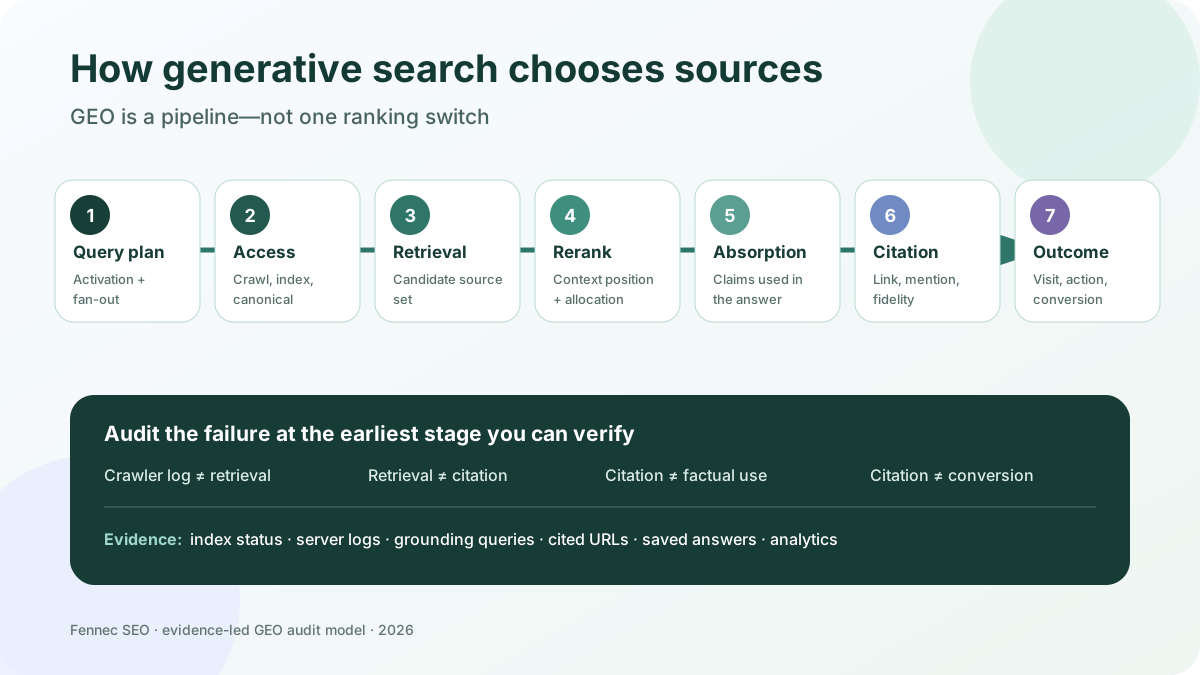
The Seven Stages Between a Query and a Citation
The exact architecture differs by product and is not fully public. The model below is therefore an audit abstraction, not a claim that every engine executes seven identical modules in this order.
| Stage | What the system is trying to do | What you can influence | Evidence you can collect | The false inference to avoid |
|---|---|---|---|---|
| 1. Activation and query planning | Interpret the need and create one or more searches | Topic coverage, entity clarity, language, task completeness | Query clusters, prompt samples, GSC queries | “One target keyword equals the whole search journey” |
| 2. Access and indexing | Fetch, render, canonicalize, and make content eligible | Status codes, robots rules, canonical, rendering, sitemap, internal links | URL inspection, server logs, rendered HTML | “A crawler hit means the page was considered for this answer” |
| 3. Candidate retrieval | Find pages relevant to each search or subquery | Relevance, terminology, passage-level support, cluster connections | Search visibility, sampled grounding queries, controlled tests | “Indexed means retrieved” |
| 4. Reranking and context allocation | Choose sources and decide how much context each receives | Source quality, originality, corroboration, freshness, usability | Citation/page trends and repeated observations | “A high organic position guarantees an AI citation” |
| 5. Absorption and synthesis | Use claims from selected context to construct an answer | Explicit claims, evidence proximity, qualifications, consistent entities | Claim-by-claim answer/source comparison | “Mentioned in the source list means the answer used our evidence” |
| 6. Citation and representation | Display sources and attach them to answer claims | Clear attribution, stable URLs, faithful supporting passages | Visible citations, citation position, representation audit | “Citation count proves authority or accurate representation” |
| 7. Outcome | Help the user continue, visit, trust, or convert | Next step, UX, brand recognition, offer and measurement | Referral sessions, assisted conversions, leads, retained users | “More citations automatically mean more revenue” |
Stage 1: Activation and Query Planning
The user’s typed query is not necessarily the complete retrieval request. A system may rewrite it, identify entities and constraints, or issue several related searches. Google calls one version of this behavior query fan-out.
Suppose the visible query is “best GEO audit workflow.” Related searches might ask how to verify crawler access, how citations are measured, which platform reports exist, or whether schema is required. We cannot see every hidden query, and we should not pretend we can reverse-engineer them exactly.
What we can do is cover the real task. Map prerequisite questions, comparison criteria, risks, and next actions. Use the query fan-out brief to design that coverage, but do not generate one thin page for every imagined query variation. Google explicitly cautions against scaled, low-value content; fan-out is a reason to build a coherent resource, not a keyword-page factory.
Stage 2: Access and Indexing
Before relevance matters, the right version of the page must be accessible. Check the canonical URL, HTTP status, robots.txt, page-level robots directives, rendered main content, mobile parity, sitemap inclusion, and internal discovery paths.
Crawler identities also have different purposes. OpenAI’s bot documentation distinguishes OAI-SearchBot, which supports search visibility, from GPTBot, which is used for model training, and ChatGPT-User, which performs user-initiated visits. Perplexity likewise says PerplexityBot follows robots.txt and separates search indexing from model training.
These controls answer an access-policy question. They do not prove downstream selection. Use Bot Simulator, Robots.txt Checker, and technical SEO audits to find access failures, then inspect AI crawler server logs for actual requests. Keep the conclusion narrow: a log entry proves a request, not retrieval, citation, or influence.
Stage 3: Candidate Retrieval
Retrieval builds a candidate set for a query or subquery. A page must match the task closely enough to be considered, but simple keyword repetition is not a retrieval strategy.
Strong candidates make the relationship among the question, entities, claims, and evidence easy to establish. A technical comparison should state what is being compared and under which conditions. A policy explanation should name the policy, effective date, affected actors, and primary source. A test should describe its method, environment, and limitations.
This is where internal architecture helps. A focused page linked from a clear topic cluster gives both people and systems context. It is also where generic summaries fail: if ten pages repeat the same public documentation, the engine has little reason to retrieve the eleventh. Original measurements, decision frameworks, examples, and primary-source interpretation create information gain.
Stage 4: Reranking and Context Allocation
Retrieved candidates still compete. Systems can rerank pages using relevance and quality signals, choose a smaller subset, and allocate different amounts of context to different sources. The details are product-specific and mostly opaque.
The original KDD 2024 GEO paper reported visibility improvements of up to 40% in its benchmark for some content modifications. That result is frequently stripped of its conditions. The experiments largely modified content already supplied within a fixed or fetched source environment; they did not demonstrate a universal 40% improvement in organic discovery across live AI products.
Later evidence adds caution. The NeurIPS 2025 C-SEO Bench found that many proposed citation-optimization methods were ineffective or harmful in its settings, while traditional ranking and in-context ranking methods were often stronger. It also found that gains diminish when many publishers adopt the same tactic. This is another reason to improve source quality rather than copy a formatting trick.
Stage 5: Absorption and Synthesis
At this stage, the system decides which information from the available context will influence the answer. This is different from displaying a citation.
A page is easier to use faithfully when important claims are explicit, evidence is close to the claim it supports, qualifications are preserved, and terminology stays consistent. That does not mean every paragraph should be converted into a tiny Q&A block. In the 2026 citation-versus-absorption preprint, Q&A formatting alone was weak in the public-data setting; the authors observed different relationships between source breadth, citation selection, and deeper answer absorption.
Use “extractability” as an editorial QA question, not as a word-count formula:
- Can a reader identify the main claim without guessing?
- Is the supporting number tied to a source, date, population, and method?
- Are exceptions adjacent to the claim rather than hidden at the bottom?
- Do pronouns and headings leave the subject unambiguous?
- Would extracting two sentences preserve the intended meaning?
The goal is faithful reuse by humans and machines, not robotic prose.
Stage 6: Citation and Representation
A visible citation is the clearest platform-level evidence that a page was selected as a displayed source. It still raises three separate questions:
- Presence: was the URL cited?
- Support: does the cited passage actually support the nearby answer claim?
- Representation: did the answer preserve the source’s meaning, scope, and uncertainty?
Track all three. A citation attached to a distorted claim is not a success. A correct source link placed far from the relevant assertion may also deliver little user value. Bing’s reporting can show citation activity and sampled grounding queries; manual source-to-answer review is still needed for fidelity.
Our AI citation guide covers this evidence layer in more detail.
Stage 7: User and Business Outcome
GEO ends too early when the report stops at citation count. A useful outcome may be brand recognition without a click, a qualified referral visit, an assisted conversion, a newsletter signup, or a product action. These require different measurements.
Build a path after the answer. Give the reader a logical next step, connect the article to a relevant tool or service, and preserve campaign/referral data where possible. Compare engagement and conversion quality, not only sessions. A source can be highly cited and commercially irrelevant; another can receive fewer but much more qualified visits.
Platform Differences That Change the Audit
Do not apply one crawler rule or one dashboard interpretation to every product.
| Surface | Publicly documented foundation | Useful observation | Important boundary |
|---|---|---|---|
| Google AI search experiences | Search index, core ranking/quality systems, RAG, possible query fan-out | Search Console web performance and generative AI reporting where available | Google says ordinary SEO fundamentals apply; no special AI schema or llms.txt requirement |
| Bing and Copilot experiences | Bing search and grounding systems | Bing AI Performance citations, cited pages, grounding-query samples, trends | Citation activity is not a ranking or endorsement |
| ChatGPT search | OAI-SearchBot can discover content for search | Referrals, server logs, visible citations and repeatable prompt samples | GPTBot training access and ChatGPT-User fetches are separate controls |
| Perplexity | Search indexing via PerplexityBot and other documented fetchers | Logs, referrals, visible source review | Indexing access is distinct from training and does not guarantee citation |
Platform documentation can change. Record the policy URL and the date you checked it instead of building a permanent rule from a screenshot.
Seven Evidence-Led GEO Practices
1. Fix Eligibility Before Editing Prose
Start with a clean 200, correct canonical, indexability, accessible rendered content, and stable internal discovery. Use Audit and Technical SEO. Copy edits cannot repair a canonical pointing elsewhere.
2. Create Non-Commodity Information
Add something another summary cannot supply: original data, a reproducible test, a decision matrix, a first-party example, a carefully scoped expert interpretation, or a workflow like the one on this page. Document the author and update date. Cite primary sources near the claims they support.
3. Complete the Task, Not Every Imagined Prompt
Cover the main need and its necessary subquestions on one coherent page. Split only when a subtopic has a different intent or deserves independent depth. Avoid mass-producing near-duplicate answers around speculative fan-out queries.
4. Reduce Claim and Entity Ambiguity
Name the product, organization, version, date, and population. Replace “it improved results” with a scoped statement such as “the benchmark reported X under Y conditions.” Keep limitations visible. This improves human trust and reduces the chance that extracted passages overstate the evidence.
5. Use Structure for Navigation, Not Magic
Descriptive headings, tables, lists, figures, and valid structured data help readers and systems understand a page. But Google says there is no special AI schema and no required chunk size. Use Schema Markup to keep markup accurate and consistent with visible content—not to manufacture an unsupported eligibility signal.
6. Separate Search, Training, and User-Fetch Controls
Write down the business policy first. Then configure the appropriate bot identities. Do not block a training crawler and assume you have blocked search discovery, or allow a user-triggered fetcher and claim broad indexing coverage.
7. Measure the Pipeline, Not One Screenshot
For each priority page, keep a stage-level record:
| Evidence | Baseline | Review cadence | Decision it supports |
|---|---|---|---|
| Indexability, canonical, rendered content | Release day | After every template or policy change | Is the page eligible? |
| Search queries and landing-page performance | Prior 28 and 90 days | Weekly or monthly | Is discoverability changing? |
| AI citation and grounding-query samples | Fixed prompt/query set | Same day and conditions each week | Where is the page represented? |
| Source-to-answer fidelity | Claim-level review | With every citation sample | Is the representation accurate? |
| Referral and engagement quality | Analytics baseline | Monthly | Are visits useful? |
| Leads, signups, or assisted conversions | Business baseline | Monthly or quarterly | Is visibility creating value? |
Keep query wording, locale, login state, product mode, date, device, and sample size with manual observations. Generative answers vary; an undocumented one-off screenshot is an anecdote, not a trend.
A 45-Minute GEO Pipeline Audit
Use this sequence on one important page before launching a rewrite project.
- Define the task. Write the user’s decision and five necessary subquestions.
- Check eligibility. Verify status, canonical, robots directives, rendered content, sitemap, and internal links.
- Map evidence. Highlight every important factual claim and record its primary source, date, method, and limitation.
- Test source-worthiness. Score the page with the AI Search Visibility Scorecard. Mark anything that merely repeats existing summaries.
- Review extractability. Read each answer-sized passage without the preceding paragraph. Repair missing subjects, unsupported numbers, and detached qualifications.
- Record platform observations. Capture the exact query/prompt and visible citations without treating them as universal results.
- Connect the outcome. Add one useful next step and confirm analytics can distinguish referrals and conversions.
The output should be a failure-stage diagnosis: “access blocked,” “retrieval evidence weak,” “citation present but representation wrong,” or “visibility present but outcome unmeasured.” “Needs more GEO” is not a diagnosis.
GEO Claims: What the Evidence Actually Supports
| Claim | Verdict | Better interpretation |
|---|---|---|
“Add llms.txt to rank in Google AI results” | Unsupported for Google | Google says it does not use llms.txt; focus on crawlable, useful pages and established Search controls |
| “Special AI schema is required” | False for Google | Use supported structured data that matches visible content; there is no special AI schema requirement |
| “An AI bot visit proves retrieval” | False | It proves a request to that URL at that time |
| “GEO tactics raise visibility by 40%” | Overgeneralized | One benchmark reported gains up to 40% under specific, often conditional source settings |
| “A citation proves the answer used our claim” | Not necessarily | Citation selection and factual absorption are related but separable events |
| “Q&A formatting wins citations” | Unproven as a general rule | Use Q&A only when it genuinely improves the user’s task; clarity and evidence matter more than the wrapper |
| “More citations mean more conversions” | Unsupported | Measure qualified referrals, assisted outcomes, and brand effects separately |
The Durable GEO Principle
GEO is not a replacement for SEO and it is not a formatting recipe. It is a way to inspect a longer chain of evidence.
Make the right page accessible. Make it the strongest source for a well-defined task. State claims so they can be understood without losing their conditions. Observe retrieval and citation where platforms expose them. Then measure whether the resulting representation helps real users.
If a metric moves, name the stage. If evidence is missing, say so. That discipline is less exciting than a “citation hack,” but it is far more useful for building durable search visibility.
Sources and Research Notes
- Google Search Central: Generative AI optimization guide
- Bing Webmaster Blog: AI Performance public preview
- OpenAI: Overview of OpenAI crawlers
- Perplexity: How Perplexity follows robots.txt
- KDD 2024: GEO—Generative Engine Optimization
- NeurIPS 2025: C-SEO Bench
- 2026 preprint: Generative Engine Optimization—A Critical Review
- 2026 preprint: Who Gets Cited and Who Gets Used?
The last two sources are preprints. They are used here to frame measurement questions, not as settled platform facts. Product behavior and reporting can change; recheck official documentation before changing crawler policy or making performance claims.
Q&A
What is the underlying mechanism of GEO?
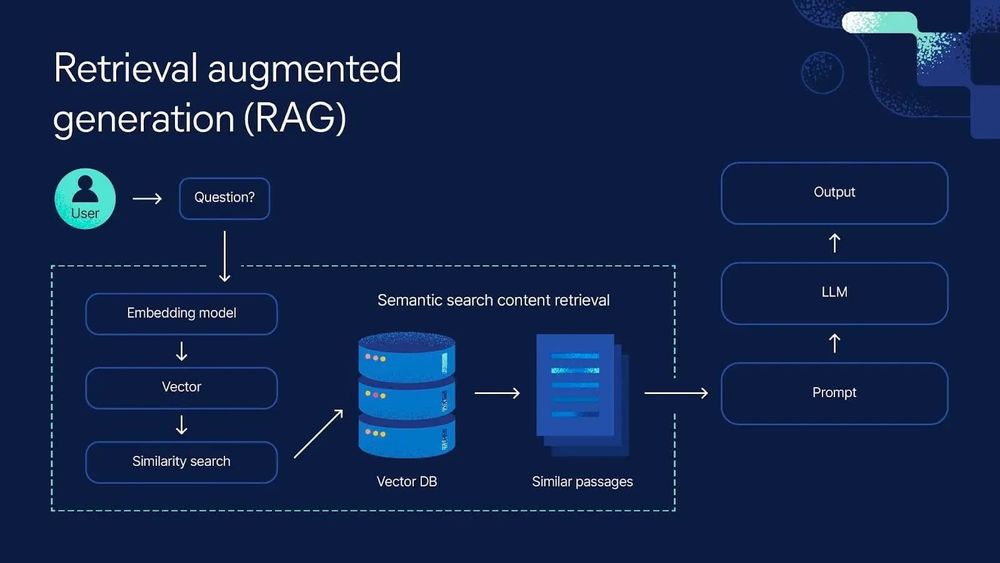
GEO is best understood as a multi-stage process: a system plans the query, accesses and retrieves candidate pages, reranks them, absorbs evidence into an answer, may cite sources, and then produces user outcomes. A page can fail at any stage.
Does allowing an AI crawler make a page more likely to be cited?
It only removes one possible access barrier. A crawler visit does not prove that the page was retrieved for a query, used in an answer, visibly cited, or responsible for a conversion.
Do special schema, llms.txt, or short content chunks improve Google AI visibility?
Google says no special schema or AI text file is required, it does not use llms.txt, and artificial chunking is unnecessary. Valid structured data should still match visible content because it helps Search understand the page.
How should GEO performance be measured?
Measure each stage separately: indexability and logs for access, Search Console and Bing AI Performance for search visibility and citations where available, repeatable prompt samples for representation, analytics for referral quality, and conversions for business impact.